Sunken or uneven concrete foundations happen in Redlands - the clay soils expand and contract with every season. We lift and level your slab, fix the drainage that caused the problem, and handle all City of Redlands permit requirements.
Foundation raising in Redlands lifts and levels sunken or uneven concrete slabs by pumping material beneath them to fill voids and push the concrete back to its original position - most residential jobs are completed in a single day, with the slab stable enough to walk on the same day and full curing taking about a week.
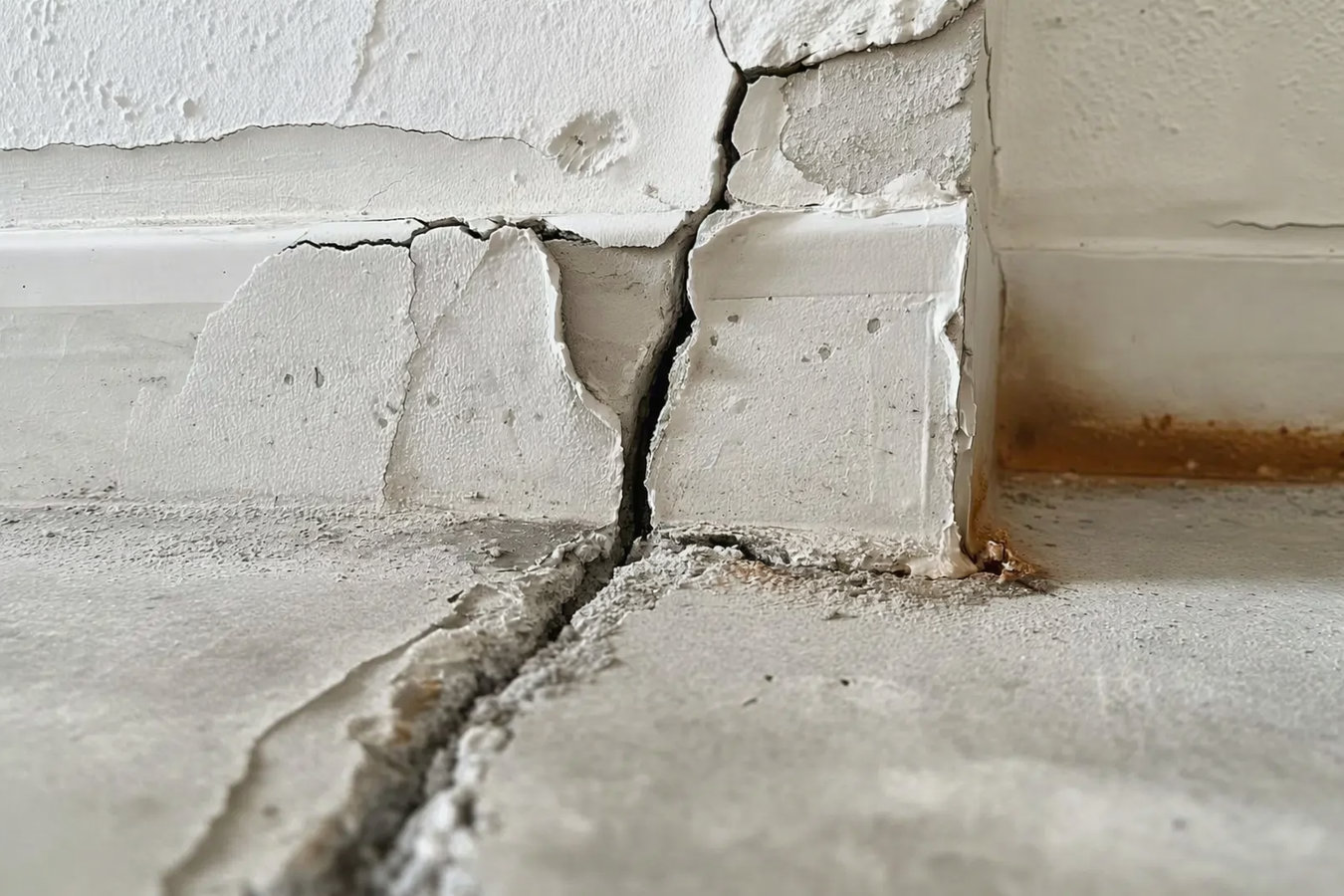
If your floor has a noticeable slope, your doors stick in their frames, or you see cracks spreading across your slab or interior walls, the foundation beneath your home has likely shifted. In Redlands, this happens because the clay-heavy soils swell when wet and shrink when dry - and that cycle repeats every year. Foundation raising gives you the option to stabilize and level the slab without tearing it out and replacing it. For homeowners whose foundations have major structural issues beyond simple settling, we also handle concrete cutting to remove damaged sections before new work begins.
The lifting itself is quick - the real question is whether the reason your slab settled in the first place gets fixed at the same time. A contractor who addresses drainage and soil conditions along with the lifting is giving you a repair that lasts. One who just pumps material under the slab without addressing the cause is setting you up to need the same work done again in a few years.
When a foundation shifts, the door frames and window frames shift with it, causing doors to drag along the floor or windows to jam in their tracks. This is one of the earliest and most noticeable signs that something has moved beneath your home. If you notice this happening in multiple rooms, it is worth having a contractor take a look.
Diagonal cracks running from the corners of door frames or windows are a classic sign of foundation movement. In Redlands, these often appear after a wet winter, when the clay soils have swollen and then dried out again. A crack that reappears after you patch it is a stronger signal than one that stays put.
Walk slowly through your home in socks and pay attention to whether the floor feels level. A noticeable slope - especially in older homes near Redlands' historic district - often means the slab beneath has dropped in one area. You can also set a marble on the floor - if it rolls consistently in one direction, that is worth noting.
Step outside and look at the visible edges of your foundation or any exposed concrete around your home's perimeter. Cracks wider than about a quarter-inch, or cracks that are wider at one end than the other, suggest uneven settling. In Redlands, these cracks often become more visible after the dry summer months when the soil has contracted and pulled away from the foundation.
We lift and level sunken concrete foundations for homes throughout Redlands using either traditional mudjacking or polyurethane foam injection, depending on your specific soil conditions, slab type, and budget. Every project starts with an on-site assessment where we check the slope of your slab, look for visible cracks, and evaluate the drainage around your home. From there, we explain what we found, what caused the settling, and what the best approach is - not just what the cheapest option is. If permits are required through the City of Redlands Building and Safety Division, we handle the application and coordinate the city inspection that confirms the work meets local standards. For homes that have foundation settling beyond what lifting can address - such as large structural cracks or damaged sections that need to be replaced - we also handle slab foundation building for full slab replacement projects.
In Redlands, the real difference between a repair that lasts and one that fails in a few years is whether the drainage problem that caused the settling gets fixed at the same time. Clay soils here move with moisture - when water pools near your foundation, it makes that movement worse. We walk every property to identify where water is accumulating and what needs to change before we lift anything. That might be regrading the soil around your perimeter, adding downspout extensions, or installing a simple drainage channel. A contractor who does not talk about drainage is not planning for your repair to last.
For homeowners on a tighter budget or with larger areas to lift - uses a proven, decades-old approach that pumps a cement and soil mixture under the slab.
For homeowners who want the fastest curing time and longest-lasting result - lightweight foam expands to fill voids and holds up better than traditional slurry in Redlands clay soil conditions.
For every home we work on - identifying and fixing the water pooling or runoff problem that caused the slab to settle in the first place.
For all jobs that require structural permits - handling the full application, inspection scheduling, and city documentation so the work is on the official record.
Redlands sits on clay-heavy soils that swell during the wet season - typically November through March - and then shrink back during the long dry summers. That cycle happens every year, and over time it pushes foundations out of position even when they were built correctly. Add in the fact that Redlands is near the San Andreas and San Jacinto fault systems, and the ground under your home is under more stress than in many other parts of the country. Foundation settling is not a sign that something went wrong during construction - it is a normal consequence of the soil conditions here. What separates a repair that lasts from one that fails is whether the contractor understands what the clay soils do and plans the work accordingly. For homeowners in Rialto, CA or Fontana, CA, the same soil conditions apply - and the same principles matter when planning a foundation repair.
Older homes in Redlands - especially those built before the 1970s in neighborhoods near the historic district or along older residential streets - are more likely to have settled foundations because soil compaction standards were less strict when those homes were built. Decades of wet-dry cycles have had time to do their work. If your home is in one of these areas and you have noticed doors sticking or cracks spreading, foundation movement is common and worth assessing sooner rather than later. The City of Redlands Building and Safety Division requires permits for structural foundation work, and that permit process includes a required city inspection - which is actually a good thing, because it means an independent reviewer confirms the work was done correctly before it is buried or covered.
When you call, we ask a few basic questions - how old your home is, what symptoms you have noticed, and whether you have had any prior foundation work done. This helps us come prepared. Most jobs can be scheduled for an initial visit within a few days to a week.
We walk your property and look at the areas you are concerned about, plus any other spots we notice. We check the slope of the slab, look for cracks, and assess the drainage around your home. This visit is free, and it results in a written estimate that explains what we found and what we recommend - not just a price.
If a permit is required by the City of Redlands, we submit the application before work begins. This usually adds a few days to a week to the timeline. Once the permit is approved, we schedule the work day. You do not need to do much to prepare - just make sure the work area is accessible and any vehicles are moved.
The crew arrives with equipment and marks the injection points on your slab. We drill small holes, inject the lifting material, and monitor the slab as it rises back into position. The actual lifting often takes just a few hours. You can stay home during the work - there is no need to vacate - though the drilling is noisy. Once the slab is at the right level, we patch the injection holes and clean up the work area. If a permit was pulled, a city inspector will schedule a visit to confirm the work meets local standards.
No obligation. We assess your slab, explain what we find in plain language, and give you a written quote. Most estimates are completed within one business day.
(909) 488-7493One of the biggest fears homeowners have is paying for a repair that does not last. What this means for you is that we diagnose the cause of your settling first - whether it is drainage, soil movement, or something else - and we explain it to you in plain language before any work begins. You make an informed decision, not a rushed one.
We have been working on Redlands foundations since 2023, which means we understand the clay soils, the wet-dry cycles, and the seismic conditions that make foundation settling so common here. What this means for you is that your repair is planned with the specific challenges of this area in mind - not based on a generic approach that works somewhere else.
In Redlands, unpermitted foundation work can create real problems when you sell your home or make an insurance claim. What this means for you is that we handle the permit process with the City of Redlands so the work is documented, inspected, and officially on record. That paperwork is an asset, not a formality. Learn more about permitting at the City of Redlands Building and Safety Division.
Homeowners in older Redlands neighborhoods sometimes worry that a contractor will show up, find something unexpected, and double the price on the spot. What this means for you is that our written estimate reflects what we actually found during the assessment - and if something genuinely unexpected comes up, we stop and talk to you before we proceed. You stay in control of the decision.
When you work with us, you get a contractor who takes the time to assess the real problem, fixes the underlying cause, and gives you a repair that holds up through Redlands' wet-dry soil cycles and seismic activity.
Precision concrete cutting to remove damaged sections before new pours or foundation work begins.
Learn moreFull slab foundation construction for new homes, ADUs, and additions in Redlands.
Learn moreRedlands clay soils do not stop moving - the sooner you address a settled slab, the less damage accumulates. Call us for a free assessment.