Redlands tree roots and clay soils are hard on sidewalks. We replace and build new concrete walkways that are properly permitted, graded, and prepared to stay level through seasonal soil movement.
Redlands tree roots and clay soils are hard on sidewalks. We replace and build new concrete walkways that are properly permitted, graded, and prepared to stay level through seasonal soil movement.
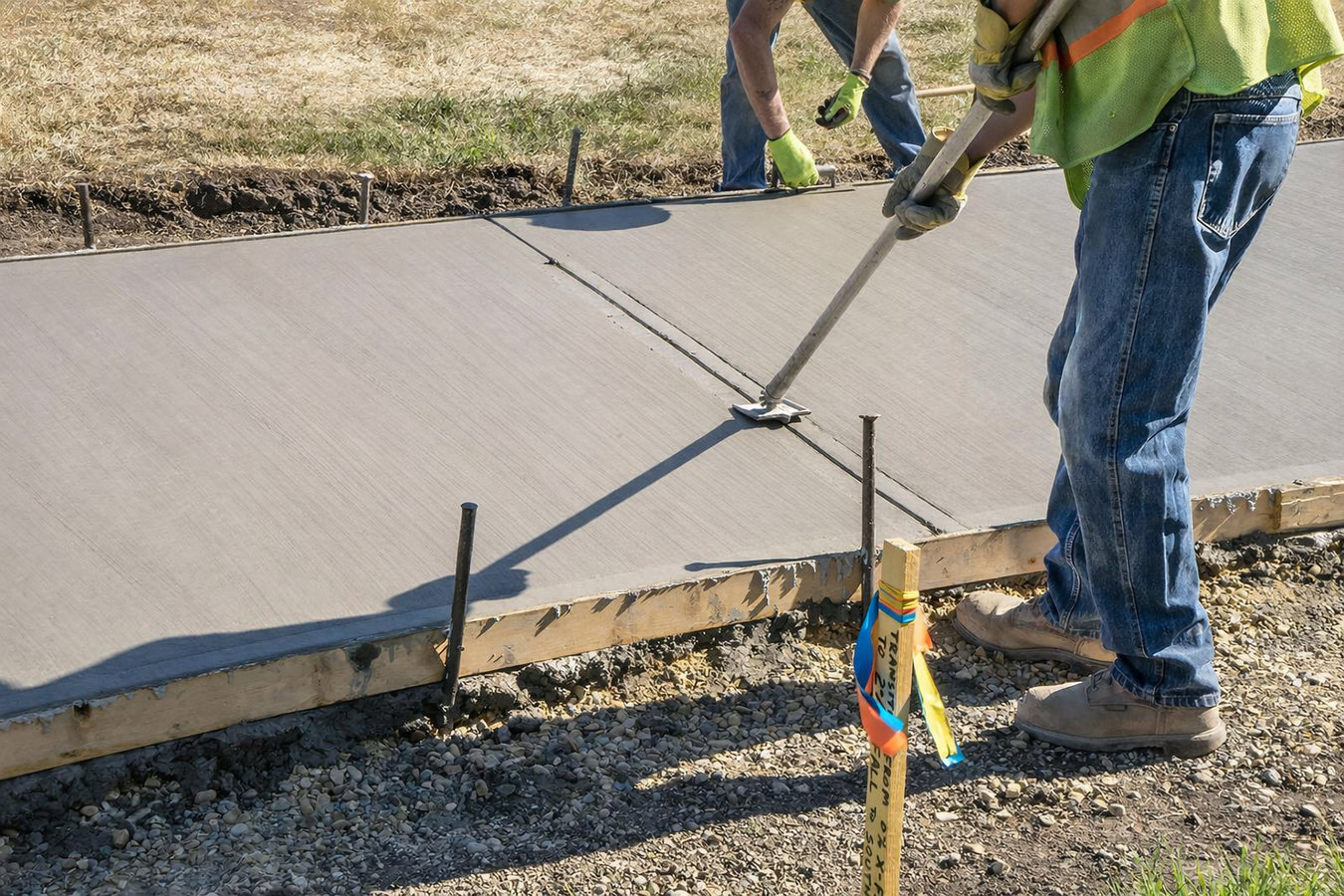
Concrete sidewalk building in Redlands means removing the old surface, preparing the ground underneath, handling any tree root issues, and pouring a new four-inch slab with proper control joints and drainage slope - most residential sidewalk projects take one to three days on-site, with the surface safe for foot traffic within 24 to 48 hours.
Most Redlands homeowners start looking at a sidewalk replacement when they notice sections that have lifted from tree roots, cracks wide enough to catch a shoe heel, or a surface so rough and pitted it has become a chore to maintain. Redlands is known for its mature tree canopy - which is part of what makes the city beautiful - but those roots are the main reason older sidewalks here fail faster than the concrete would otherwise. A properly prepared new sidewalk, with root management built in from the start, solves the problem rather than just covering it up. If your project also involves connecting the new walk to a recently updated driveway, our concrete driveway building team can coordinate both scopes together.
In California, sidewalk work along a public street requires a permit, and the city inspection that follows is what keeps your project legally protected. The City of Redlands Public Works Department oversees these permits, and we handle the application on your behalf so you never need to visit city offices.
If one slab of your sidewalk sits higher than the one next to it, that is a trip hazard - and in Redlands, it is often caused by tree roots pushing up from below or by clay soil shifting with the seasons. This kind of unevenness does not fix itself and tends to get worse over time as roots continue to grow.
Hairline cracks are normal and not usually a problem. But cracks wide enough to fit a finger into - especially ones that run all the way across a slab - mean the concrete has lost its structural integrity. In Redlands, repeated cycles of summer heat and occasional winter rain accelerate this kind of damage, and once a crack reaches that width, patching is only a temporary fix.
When the top layer of concrete starts to peel away or looks sandblasted, the surface is deteriorating. This happens faster in the Inland Empire's intense sun, which breaks down concrete over time. A rough surface is harder to walk on, collects dirt and debris, and is a sign the concrete's lifespan is running out.
A well-built sidewalk is slightly sloped so rainwater runs off to the side. If you notice puddles sitting after rain or irrigation, the surface has either settled unevenly or was not graded correctly when it was built. Standing water speeds up concrete deterioration and creates a slip hazard on an already compromised surface.
We build and replace residential concrete sidewalks across Redlands - from short front-yard paths to longer walkways connecting a detached garage or ADU to the street. Standard sidewalks are poured four inches thick with a broom finish that stays slip-resistant when wet, properly spaced control joints, and a slight cross-slope that moves water away from the surface. For areas where vehicles will ever cross - like the apron at the bottom of a driveway - we pour at six inches for the added load capacity. If you want something with more visual interest, we also offer stamped sidewalks and exposed aggregate finishes that hold up to Redlands conditions while looking far better than plain gray concrete.
Sidewalks rarely stand alone as a project. If you are updating the full front of your property, our garage floor concrete service handles the interior slab while we handle the outdoor walking surfaces. And if your new sidewalk needs to connect to a refreshed driveway, our concrete driveway building team can coordinate both scopes so the finished result looks intentional and ties together cleanly.
The right choice for most Redlands homeowners who need a durable, safe, low-maintenance walking surface that meets city requirements.
Best for properties with mature trees nearby, where root management from the start is the only way to avoid the same problem repeating within a few years.
A good fit for homeowners near the historic downtown or neighborhoods where curb appeal matters and a plain gray surface feels out of step.
Ideal when you have added a backyard unit, room addition, or converted garage and need a proper walking connection built to city accessibility standards.
Redlands has one of the largest collections of mature trees in the Inland Empire - from the historic orange groves and large street trees in older neighborhoods near downtown to the established landscaping in areas around the University of Redlands. Those trees are what make the city look the way it does, but their roots are the primary reason concrete sidewalks here fail faster than the material would otherwise. A contractor who knows Redlands accounts for roots before pouring - whether that means trimming them back carefully, installing a root barrier membrane, or adjusting the sidewalk layout slightly to reduce future conflict. Pouring straight over the same conditions without addressing roots means the new sidewalk faces the same failure in a shorter timeframe. We work across Redlands and nearby Yucaipa and Colton, where the same soil and root conditions apply.
Redlands also sits in the Inland Empire, where summer temperatures regularly climb above 100 degrees Fahrenheit. Pouring concrete in extreme heat is risky - the surface dries too fast, which weakens it and causes cracking. We schedule pours for early morning in summer months and use techniques to slow the drying process when needed. Spring and fall remain the most forgiving windows, but we work year-round and know how to manage hot-weather conditions when the project timeline requires it. The American Concrete Institute publishes standards specifically for hot-weather concreting, and those are the guidelines we follow when temperatures climb.
Call or submit a request and we will get back to you within one business day to schedule a visit. We look at the existing surface, assess any tree root issues nearby, and measure the scope. You get a written estimate covering cost, timeline, and what the project includes before you commit to anything.
For sidewalk work along a public street, we apply for the required permit with the City of Redlands Public Works Department before work begins. We handle the paperwork and coordinate the inspection. This step typically adds a few days to a week to the start of the project.
The crew removes the old concrete, hauls it away, and addresses root conditions. Then we grade and compact the soil and sometimes add a gravel base layer - particularly important in Redlands where clay soils need extra preparation. This is the step that determines whether your new sidewalk lasts 10 years or 40.
We pour and finish the concrete, cut control joints, and apply any decorative treatment if requested. After curing, a city inspector verifies the work meets Redlands standards, and we coordinate that visit. The permit closes, the work is on record, and you have a finished sidewalk with documentation to back it up.
We handle permits, root management, and city inspection. Written estimates, no pressure to book.
(909) 488-7493Redlands has some of the most mature tree canopy in the Inland Empire, and tree roots are the top cause of sidewalk failure here. We assess root conditions before we pour anything and build in a management plan - whether that is cutting back roots carefully, installing a root barrier, or adjusting the sidewalk alignment. That is the only way to avoid replacing the same sidewalk again in a few years.
We apply for the required City of Redlands permit, coordinate the inspection, and close the permit when the job is done. You never have to visit city offices or navigate public works paperwork. The inspection creates a record that protects you from liability - which matters in Redlands, where sidewalk trip-and-fall incidents along older walks are a real concern.
Inland Empire summers regularly push past 100 degrees Fahrenheit. We schedule pours for early morning during summer months and use approved techniques to slow the drying process - the same approach recommended by the American Concrete Institute for hot-weather concreting. That step protects the strength of the finished slab when the calendar does not cooperate.
Our California Contractors State License Board license covers the concrete work we do. Any contractor doing work over $500 in California is required by law to be licensed - and you can verify any license at cslb.ca.gov in under a minute. Licensed contractors carry insurance, which protects your property if anything unexpected happens during the project.
All of this comes from working in Redlands and the broader Inland Empire - not from a generic approach that ignores what makes this city and its soil conditions different. When you call us, you get someone who already knows the variables before they arrive on your property.
Upgrade the interior slab while we handle your outdoor walking surfaces - coordinate both scopes for a cleaner, more efficient project.
Learn moreConnect your new sidewalk to a freshly poured driveway for a front-of-property upgrade that is designed to work together from day one.
Learn moreSummer scheduling fills fast in the Inland Empire - reach out now and lock in your project before the heat makes pours harder to time.