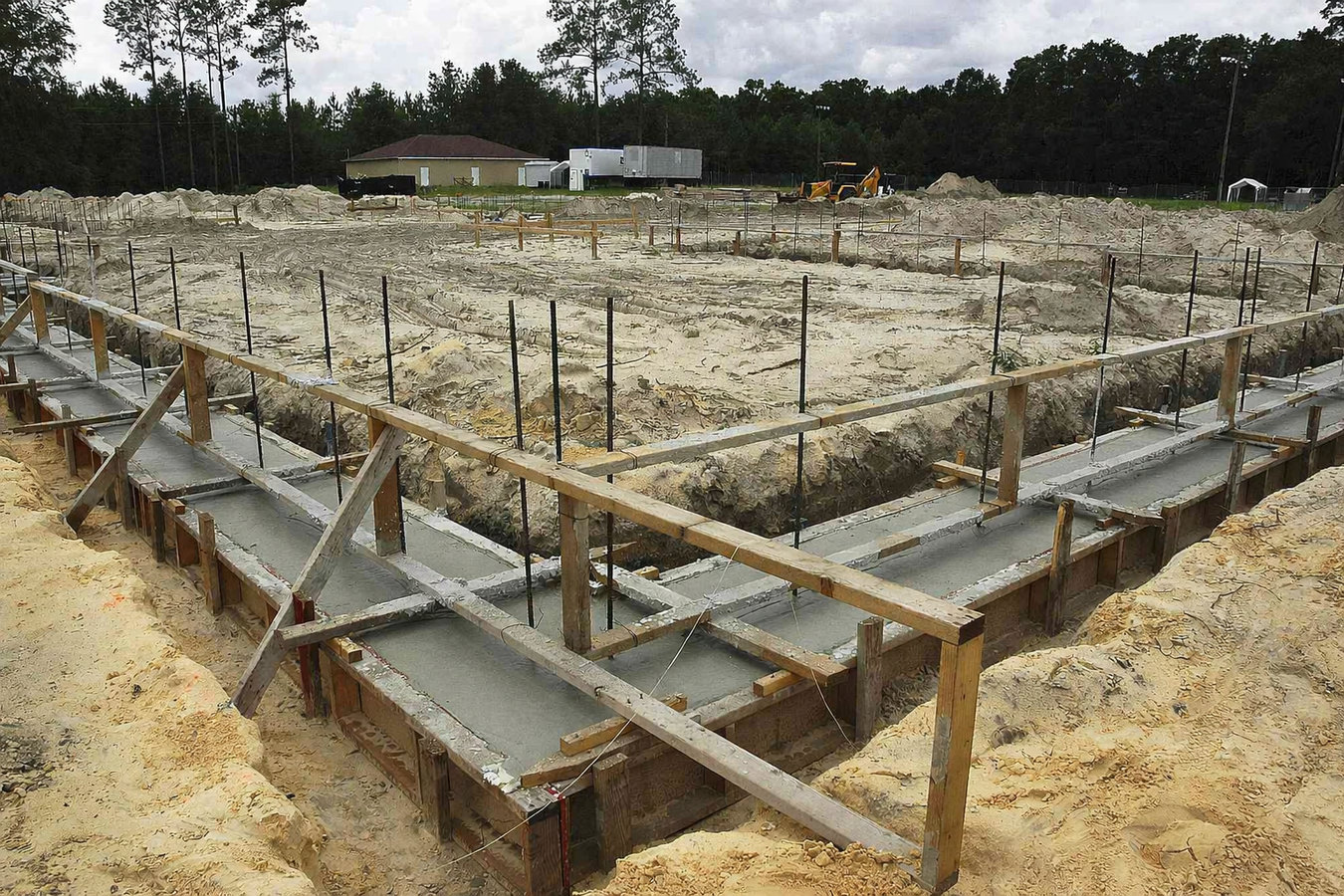
Adding a deck, room addition, retaining wall, or ADU starts underground. We pour concrete footings designed for Redlands clay soils, California seismic requirements, and City of Redlands permit inspections.
Concrete footings in Redlands are the buried concrete bases that hold up decks, room additions, retaining walls, and other structures - most residential footing projects take one to two days of active work once the City of Redlands permit is in hand, plus seven or more days of curing before construction above can begin.
Footings are one of those things you never see once the project is done - but they determine whether the structure above them stays level and stable for decades or starts shifting and cracking within a few years. Redlands homeowners most often need new footings when adding a deck, an exterior staircase, a retaining wall over a couple of feet tall, a room addition, or an accessory dwelling unit. The city requires a building permit for all of these, and the permit process includes a city inspector physically checking the footing depth and rebar before the concrete is poured. For projects that also require a full slab on top of the footings, we handle that work through our foundation installation service.
A footing poured in the wrong soil or at the wrong depth will not fail immediately - it will look fine for a few years and then start to move. In Redlands, the clay soils and seismic requirements make getting this right more important than in most parts of the country.
If you see diagonal cracks spreading from the corners of doors or windows - inside or outside - that is often a sign the footings below are shifting. In Redlands, this can happen when clay-heavy soil goes through repeated wet and dry cycles over the years. It does not always mean a crisis, but a professional should assess it before the movement gets worse.
When footings shift, the frame of the house moves with them - and the first place you usually notice it is a door that suddenly sticks or a window that will not latch. This is especially common in Redlands homes built before the 1970s, when footing depths and reinforcement standards were less stringent. If this is happening in multiple spots, a contractor should assess the foundation.
If you notice a gap opening between your house and an attached garage, porch, or addition - especially one that seems to be growing - the footings under one of those structures may be settling at a different rate. This is a common finding in Redlands homes where additions were built at different times on footings of different depths.
Any new structure that carries weight - a room addition, a covered patio, a deck, or a retaining wall over a couple of feet tall - requires new footings before construction can begin. The City of Redlands requires it as part of the permit process. If you are planning any of these projects, footing work is part of the package from the start.
We pour concrete footings for decks, room additions, retaining walls, ADUs, outbuildings, and accessory structures throughout Redlands. Every project starts with a free on-site visit to assess the soil conditions, access, and project scope before any numbers are discussed. From there, we handle the full process: permit application and coordination with the City of Redlands Building and Safety Division, utility locating through 811 before any digging, excavation to the required depth, rebar placement, pre-pour city inspection, the concrete pour, and curing management. For projects that grow beyond basic footing work into full structural pours, we also handle foundation raising for properties where the existing structure needs to be lifted and re-supported.
In Redlands, every footing we pour includes the seismic steel reinforcement that California building code requires for this zone. That means specific rebar sizes, spacing, and connection details where the footing meets the structure above it. The city inspector checks all of this before we pour - which means by the time concrete goes in, an independent reviewer has already confirmed the work is correct. American Concrete Institute standards guide our reinforcement design and curing practices on every project.
For homeowners building a new or replacement deck - sized and placed to carry the deck load and meet current Redlands permit requirements.
For homeowners adding a room addition or accessory dwelling unit - designed with California seismic reinforcement and proper depth for local soil conditions.
For homeowners building a retaining wall over a couple of feet tall - wider and deeper than surface footings, built to resist the lateral pressure of soil behind the wall.
For homeowners whose existing footings are cracked, settling, or no longer meeting code requirements - full removal and replacement on a properly assessed base.
Two things make footing work in Redlands meaningfully different from a standard pour. The first is soil: large portions of Redlands sit on clay-bearing soil that expands when wet and contracts when dry. That movement, repeated over years, is what cracks footings that were not designed with it in mind - and Redlands gets seasonal wet spells from November through March followed by months of dry heat that shrinks the ground back down. A contractor who knows this area will assess your specific soil conditions before designing the footing depth and reinforcement, rather than defaulting to a standard spec that may not fit your site. Homeowners in Highland deal with the same expansive soil conditions, and the same assessment process applies to every project we build there.
The second factor is seismic design. Redlands sits in an active seismic zone in Southern California, and California building code requires footings here to include specific steel reinforcement and connection details that would not be required in most other states. The City of Redlands enforces these requirements through the required pre-pour inspection - if the rebar does not match the approved plans, the pour does not happen until it is corrected. Redlands also has a large number of homes built between the 1920s and 1960s, and additions on these properties sometimes reveal earlier footing work that does not meet current standards - which can affect your project scope. Homeowners in Yucaipa and across the Inland Empire face similar seismic requirements, and we build to the same standard there. California Geological Survey seismic hazard maps inform our design approach for every local project.
We visit your property to assess the soil and site conditions before giving you any numbers - footing work is hard to quote accurately without seeing the ground. The visit is free and takes about 30 to 45 minutes. We reply to all inquiries within 1 business day.
We apply for the required building permit through the City of Redlands Building and Safety Division. Permit review typically takes one to three weeks. We handle all communication with the city - you do not have to deal with city hall yourself.
The crew digs to the required depth, places steel reinforcing bars inside the excavation, and then a city inspector visits to verify that depth and reinforcement match the approved plans. The concrete is not poured until this inspection is passed.
Once the inspection is approved, the concrete is poured and the crew cleans up the site. Plan on at least seven days before significant construction begins on top of the footing - and up to 28 days for full strength. We cover or mist new footings during Redlands summer heat to protect the cure.
No commitment required. We assess your site in person and give you a written estimate before any work begins - permit fees included in the estimate so there are no surprises.
(909) 488-7493Redlands sits in an active Southern California seismic zone, and California building code requires specific rebar sizing, spacing, and connection details that many out-of-area contractors overlook. We design the reinforcement for every footing to meet the code requirements for this zone before the city inspector ever shows up to check it.
Clay soils in the Redlands area shift with the seasons, and a footing that is not designed for that movement will crack over time. We assess your specific site conditions before we determine footing depth and reinforcement - not after. According to the California Geological Survey, expansive soils are one of the most common causes of structural distress in the Inland Empire.
We apply for the permit, coordinate the required pre-pour inspection, and make sure the city inspector signs off before we pour a single yard of concrete. You get documented proof that the work was independently verified - which protects you now and when you sell the property.
Redlands summer temperatures regularly exceed 95 degrees F, and concrete that dries too fast on the surface before curing underneath is weaker than it should be. We schedule pours for early morning and use coverings or misting to keep new footings properly moist during the cure window. This is standard practice for every project we build here from June through September.
Every footing project we build in Redlands goes through the same process: site assessment, permit, pre-pour inspection, pour, and documented city sign-off. That sequence is not optional - it is the standard that protects you as a homeowner and the standard we hold ourselves to on every job, from a single deck post to a full addition foundation.
When the structure above needs to be lifted and the footing system rebuilt - a next-level scope for settling or failing foundations.
Learn moreFull foundation pours that go beyond individual footings - for new structures, room additions, and ADUs that need a complete concrete base.
Learn morePermit season fills up fast in the Inland Empire - reach out now to lock in your project date before the summer heat and inspection backlog arrive.